
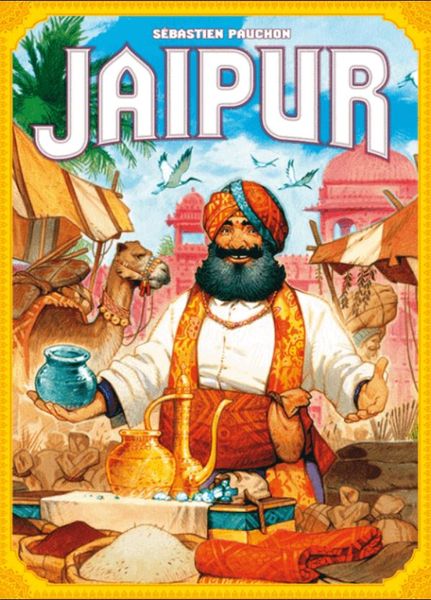
JAIPUR is a card drafting market game where each player is picking up goods and then trying to sell them at the market for the most worth.
There are six different goods available. The first 3 (leather, spice, and cloth) are basic and can be sold as low as one card. The other 3 goods (silver, gold, and diamonds) are more expensive and have a minimum sell of two cards.
Each turn you can pick up cards from the central market (one and replace, more than one and trade back, or all available camels), or you can sell. When you sell goods, you take the equivalent number of tokens for that good.
What makes this game so great are those tokens. They reduce in worth as they get used up, meaning you want to go in early to get the highest ones for each goods. But there is another set of tokens you get as a bonus if you sell 3, 4, or 5 of a kind, making you want to save up.
While it’s a short game, there is constant decision making happening each turn as you weigh up whether to go early or late. It’s a constant gamble.
Do you sell what you have or risk waiting to get more? And if you remove something from the market, it not only gives you opponent an idea of what you’re after, but also puts a new goods card into the market.
We got into JAIPUR early on and it became a firm favourite. We like how you can’t always tell from someone’s stack of tokens who has won until they’re all counted. And the decisions are interesting and have to be made on the fly each turn. You respond to your opponents’ actions.
It’s not a particularly deep game, but the choices you have to make, even controlling the end game to get a few more points, give it a little tension.
Some people might not like the luck factor involved. It can be annoying when you don’t have a good choice of cards.

Overall JAIPUR is simple to learn, quick to play, and regular fun with the right opponent.
 Always Play Blue